|

Intro
The
Dice The Layout Rules
Basic Betting Odds
Next Page
Introduction
It is common knowledge that, invariably, the craps
players make the most noise. They cheer and shout and laugh as
if they were at the millennium party. Sometimes it seems almost unfair that
they were having so much fun. Fair or not, one thing is certain: Craps is
among the most exciting games you can play in a casino.
At first glance, craps looks daunting. There are numerous
bets that you can make, and some of the terminology sounds complicated.
This is probably why the popularity of craps has waned over recent years.
But the effort it takes to learn the game is worth it, considering all the
fun you can have once you understand the basic concepts.
The Dice
The game of craps revolves around rolling a pair of dice.
The person who rolls the dice is referred to as "the Shooter." A
player, not a dealer, is chosen to become the Shooter. Each player is
given a chance to be the Shooter if they stay at a table long enough. The
turn to be the Shooter rotates around the table clockwise starting with the
player closest to the two o'clock position on the table
Since the game uses two dice, a Shooter can roll any number
between 2 and 12. It is important to remember that certain numbers are
more likely to come up than others. For example, there are 6 different
ways to roll a 7, giving it a roughly 16.6% chance of coming up on each
roll. On the other hand, there is only one way to roll a 2 or 12, and the
chances of rolling either is less than 3%.
The following chart gives you an idea of which numbers occur
most frequently. There are 36 possible outcomes for each roll.
| Number Rolled |
Dice Combinations |
% Chance |
| 2 |
1/1 |
2.77% |
| 3 |
1/2, 2/1 |
5.55% |
| 4 |
1/3, 2/2, 3/1 |
8.33% |
| 5 |
1/4, 2/3, 3/2, 4/1 |
11.11% |
| 6 |
1/5, 2/4, 3/3, 4/2, 5/1 |
13.88% |
| 7 |
1/6, 2/5, 3/4, 4/3, 5/2, 6/1 |
16.66% |
| 8 |
2/6, 3/5, 4/4, 5/3, 6/2 |
13.88% |
| 9 |
3/6, 4/5, 5/4, 6/3 |
11.11% |
| 10 |
4/6, 5/5, 6/4 |
8.33% |
| 11 |
5/6, 6/5 |
5.55% |
| 12 |
6/6 |
2.77% |
Since 7 is the most frequently rolled number, it comes as no
surprise that the game revolves much around rolling this number.
The Layout
Before we go any further, let's take a look at what a craps
layout looks like. The following layout is used by Imagine
Casino, our company based in Southern California.
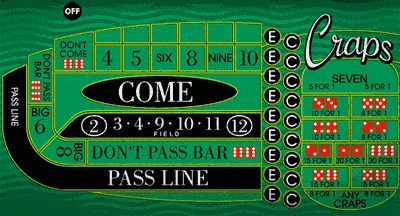
The layout above is actually only slightly
more than one-half of a full craps
layout. If you play craps at a casino, the left portion of the layout
is duplicated on the right, allowing more players to gather around the table to place bets.
The Rules
The basic game of Craps has two
distinctive halves. The first half of the game is
identified by the two base dealers' pucks 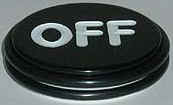 and lasts just one roll of the dice.
| At the start, the
Shooter places an initial mandatory bet on the Pass Line (or the Don't
Pass for advanced players). The Shooter then chooses two die from
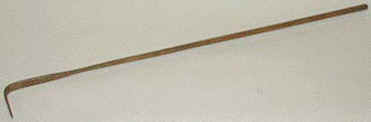
the five die that are offered by the croupier dealer (the dealer with the L-shaped stick
standing center stage on the players' side of the table - he is often
times called the "Stick"). |
 |
The Shooter rolls the
dice, and this first
roll is called the "Come Out" roll. At this point, there are
three possibilities - the Shooter wins (rolls a 7 or 11), loses (rolls a
2, 3 or 12 better known as "Craps") or establishes a "Point" (rolls a 4, 5, 6,
8, 9 or 10).
In the cases of a win or a lose, these would be
considered one roll games. With a 7 or 11, all Pass Line bettors
will be given an even money payoff. With a Craps roll, a 2, 3 or 12, all
Pass Line bets will be collected. In either case, the Shooter gets to roll
again to start a new game (Come Out).
When a Point is established, the base
dealers will flip their pucks over to display the On side 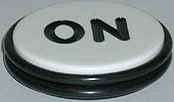 and move the pucks to the boxes on the layout that identify the established
Point. We then move on
to the second half of the game. In the second half, the Shooter
continues to roll the dice until either a 7 is rolled (in which case all Pass
Line bets are lost) or the number that has been established as the Point is
rolled again (then everyone wins). More on this later.
and move the pucks to the boxes on the layout that identify the established
Point. We then move on
to the second half of the game. In the second half, the Shooter
continues to roll the dice until either a 7 is rolled (in which case all Pass
Line bets are lost) or the number that has been established as the Point is
rolled again (then everyone wins). More on this later.
Basic Betting - Pass Line and Don't
Pass
Prior to the Come Out roll, players may make one of two bets, by
placing chips on either the "Pass Line" or the "Don't Pass". You are not required to make this
bet unless you are the designated Shooter.. By far, the more popular bet to make is the
Pass Line
bet.
The Pass Line bettor is betting with the
dice (with the Shooter), and is often
called the "right bettor." The Don't Pass bettor is betting
against the dice (or against the Shooter), and is called the "wrong bettor." The
difference between the two bets is as follows:
The Pass Line Bet
When you bet on the pass line, one of the following will occur.
-
The Come Out roll will be a 7 or 11, in which case you
immediately win even money (1:1).
-
The Come Out roll will be a 2, 3, or
12 (again called "Craps), in which case you
lose.
-
The Come Out roll will be a 4, 5, 6,
8, 9 or 10 which then becomes the Point. If the shooter
repeats the Point on a subsequent roll, you win and get paid even
money. If a 7 shows up before the Point repeats, you lose your bet.
The Don't Pass Bet
When you bet on the Don't Pass, one of the following will
occur:
-
The Come Out roll will be a 2 or 3, in which case you
immediately win even money.
-
The Come Out roll will be a 7 or 11, in which case you lose.
-
The Come Out roll will be a 12.
The 12 is "Barred" and you "Push," neither
winning nor losing.
-
The other six number combinations
become the Point. The Don't Pass bet
wins even money if the shooter rolls a 7 before repeating the Point. The bet loses if the
Point repeats first.
With the exception of when a 12 is rolled, the
Pass and Don't Pass bets are exact opposites of
each other.
Odds Bets
Once the shooter makes a point, you can place another bet called
an "Odds Bet" or "Free Odds Bet." An Odds Bet is an
additional bet that compliments your Pass or Don't Pass wager. Odds Bets
are the best bets you can make in a casino because the house will pay you the "True
Odds" of the number winning against the 7 or the Point. This means the house has absolutely no edge on
these bets.
In a real casino, you would make an Odds
Bet by placing
chips behind your original Pass Line bet. If you are a Don't Pass bettor,
you will make a Don't Pass Odds Bet by placing chips next to your original bet.
The Odds Bet will pay off if you win your original bet.
If your original bet was a Pass Line bet, and you make an additional Odds Bet,
both bets win if the shooter repeats the point. If your original bet was a
Don't Pass bet, and you bet the odds, both bets win when a 7 comes up before the
Point.
Here is the good part. While your original
Pass or Don't Pass bets only pay you even money when you win, the Odds Bet will pay whatever
the true odds are. For example, if you are a Pass Line bettor, and the
point is 4, you will receive a 2:1 payment on your Odds Bet. The amount
you win depends on what the point is, and how difficult it is to repeat that
point.
Generally most casinos are two times odds
(2x odds) houses. You can bet up to twice your
original bet on a Pass Line Odds Bet. Some casinos consider it a draw to
offer 10x or 100x odds on their craps tables. In these cases, bet a small
Pass Line bet and back up your bet with a higher Odds Bet.
Don't players bet odds that are equal to
the payoff on the Pass Line bet. The actual amount depends upon the value of the
Point. By
all means, you should bet the maximum possible on odds bets because they
are the most favorable bets you can possibly make in a casino.
The following chart will give you an idea of what the odds bets
pay:
| If
you are a Pass Line Odds Bettor: |
| The payout is... |
if the point is
... |
| 2 to 1 |
4 or 10 |
| 3 to 2 |
5 or 9 |
| 6 to 5 |
6 or 8 |
| If
you are a Don't Pass Odds Bettor: |
| The payout is... |
if the point is
... |
| 1 to 2 |
4 or 10 |
| 2 to 3 |
5 or 9 |
| 5 to 6 |
6 or 8 |
Now you know the basic bets that you can make in
Craps.
But we're not done yet. There are plenty of other bets you can make.
Click here for page two of Craps
instruction.
Intro
The
Dice The Layout Rules
Basic Betting Odds
Next Page
|


 .
.